
KY needs thousands of new doctors. Legislation aims to help rural health care
Two bills introduced this year aim to help solve Kentucky’s physician shortage, as the University of Kentucky is expanding its medical enrollment.
A study from the Cicero Institute, a public policy think tank, found that nationwide, the country will face a shortage of 120,000 physicians annually by 2030. In Kentucky, the state could see a shortage of 2,926 doctors. The U.S. Department of Health and Human Services has designated 40 counties in Kentucky as health professional shortage areas for primary care providers.
The two pieces of legislation are both designed to target those shortages, especially in rural areas of the state, legislators said.
Senate Bill 137, sponsored by Sen. Stephen Meredith, R-Leitchfield, would establish a three-year provisional license for doctors who move to Kentucky from other states or countries. After three years in Kentucky, the provisional license would automatically convert into a full medical license.
Meredith, who previously worked as the CEO of the Twin Lakes Regional Medical Center in Grayson County, said the bill would strengthen health care access in Kentucky, particularly for people living in rural areas who currently must travel for health care.
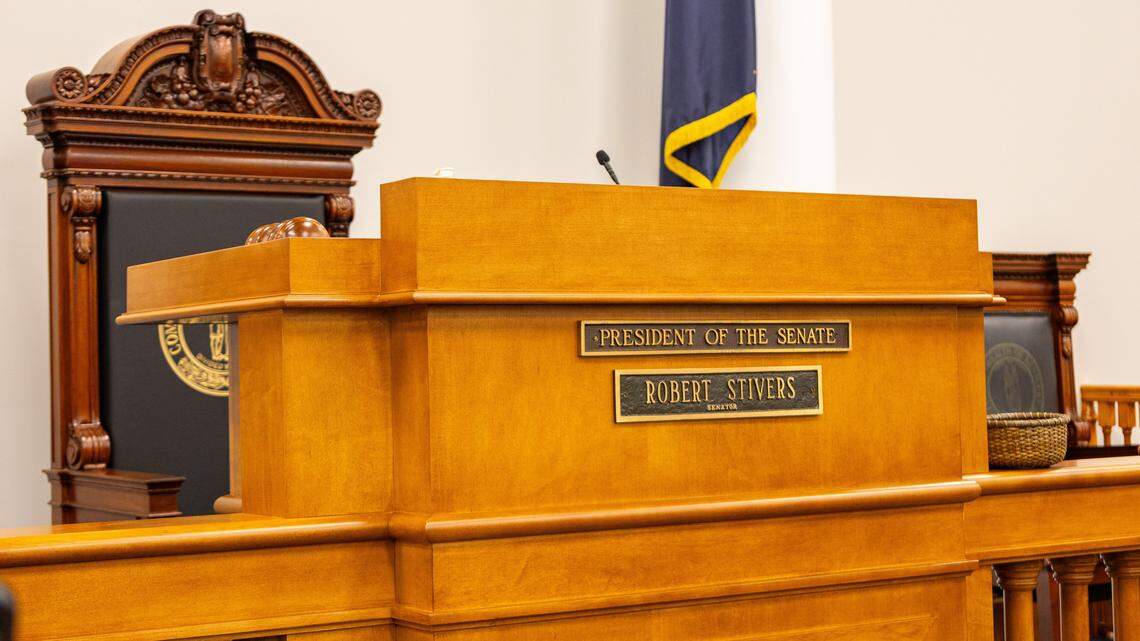
Senate Joint Resolution 116, sponsored by Senate President Robert Stivers, R-Manchester, directs the University of Kentucky, the University of Louisville, and Eastern Kentucky University to conduct a study on finding solutions to the physician shortage. UK and UofL offer the state’s public four-year medical doctorate programs. Last year, an osteopathic medicine degree was approved at EKU.
“I challenge each of them to open up their aperture and examine the health care shortage in unserved and underserved areas from all angles and develop a comprehensive solution,” Stivers said. “Nothing is off the table from recruitment strategies to scholarships or loan forgiveness and leveraging the latest in AI technology.”
Addressing a need for doctors in rural Kentucky
Under SB137, physicians who have worked for at least five years and completed their residency or other postgraduate training are eligible for provisional licensure after securing a job in health care in Kentucky.
It passed through the Senate last week and now goes before the House.
“Patients should not have to travel long distances or wait extended periods to receive care,” said Meredith. “By creating a responsible pathway for experienced physicians to serve in Kentucky, we can help strengthen our health care system and improve access for the communities that need it most.”
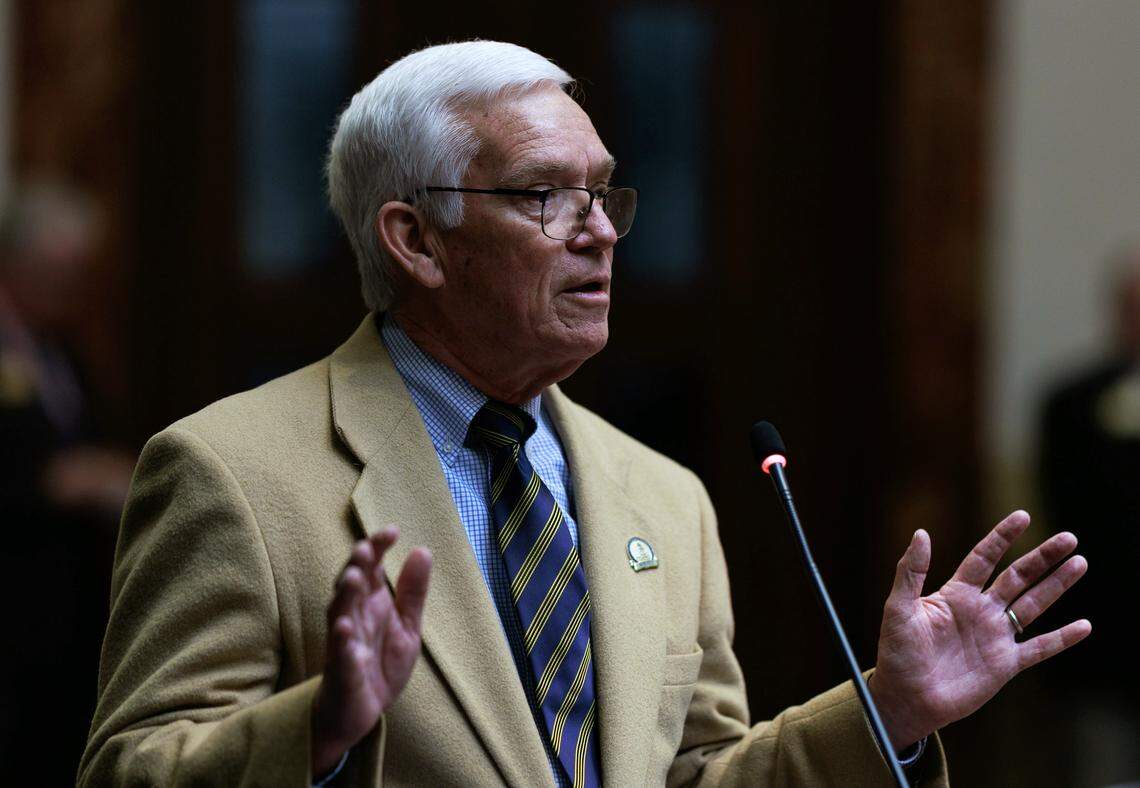
SJR116 also passed the Senate and now goes to the House. Over 75% of physicians in Kentucky practice in urban areas, according to the resolution, leading to patients traveling for care.
The resolution directs UK, UofL and EKU to look at ways to “expand health care opportunities in medically underserved areas in collaboration with community, state agency, professional associations, and other stakeholders.”
According to the Association of American Medical Colleges, 57% of medical residents will continue practicing in the state they train in. The schools are to look for “actionable solutions” to the physician shortages and look at ways to improve access in underserved areas of the state, with a report back to the general assembly by Jan. 1, 2027.
UK to open new health education building
UK is expected to complete construction on the Michael D. Rankin MD Health Education Building, which would bring together the colleges of medicine, public health, health sciences and nursing into one space.
The $410 million, 500,000-square-foot space is designed to allow UK to enroll more students in medical fields.
Located between UK’s main campus and the UK hospitals, the new building will allow UK to increase its enrollment in those colleges, addressing the need for more health care workers in Kentucky. Early estimates were that UK could grow its class size to 200 students per year, and more than 1,000 total medical students.